
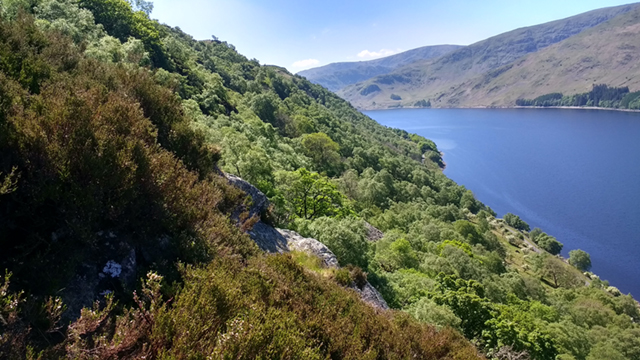
5th February 2026 – A talk by Pete Jones, Cumbria Wildlife Trust’s Project Manager for Skiddaw Forest.
A talk to the Keswick Natural History Society on 5th February about the Cumbria Wildlife Trust’s Skiddaw Forest project, given by project manager Pete Jones, attracted the largest audience of the 2025-26 season. More than 60 people came along to hear the latest news about this iconic project to regenerate Nature on the 1200 hectare (12 square kilometre) site, with the goal of achieving radical change over a 100-year period.
Skiddaw Forest is the name of the bowl-shaped area stretching from the eastern edge of Skiddaw’s summit ridge, to the Calvas in the north, and to Lonscale Fell in the south-east. It has the Cumbria Way running through it, but Skiddaw House, the private hostel centrally located in the Forest, will remain in private hands. The terrain ranges from high montane habitats at the highest levels, to extensive areas of deep peat, and drier areas providing a variety of different habitats. Parts of the site have the potential to be restored to temperate rainforest – a very rare habitat characterised by scrubby trees, high rainfall, and a lot of mosses and liverworts
Skiddaw Forest was so named when, in the 1300s, it was designated a hunting reserve for royalty and nobility, with other folk banned from using it. Then, the area had a lot more tree cover, but it never had densely-spaced, tall trees – the terrain and climate are not suited to that. However, the situation gradually changed, and in Victorian times it was managed as a grouse moor, with a lot of drainage put in, and heather coverage strongly encouraged. From the 1940s, the grouse moor gave way to sheep farming, with numbers building up to about 1200 head of sheep in 1977 as a consequence of governments’ financial incentives. Skiddaw House was used at that time to accommodate shepherds. Later, however, the sheep numbers dwindled, the animals were taken off the land over the winter, and now there has been no grazing for 12 years.
Cumbria Wildlife Trust had been wanting to acquire a large new area to make into a nature reserve, and when Skiddaw Forest came up for sale, they realised its potential for landscape-scale Nature regeneration. The Trust acquired it in 2024, thanks to a very generous grant from Aviva, followed by unprecedented success in raising an additional £1.2m, from 7,000 donors, in just six weeks.
With the project covering such a large area, and having such a long-term vision, it was clear that it was both essential and possible to carry out systematic and thorough assessments of the terrain, the range of different habitats, the existing diversity and abundance of species, and even what species had lived in the area thousands of years ago. Help is coming from many quarters, including on-site volunteers, off-site volunteers raising thousands of new trees from locally-sourced seed, from native species, and inputs from a number of universities.
Additional sponsors are being found for key areas of work, such as the Heritage Lottery Fund. The waste disposal company Biffa is funding peat restoration works, fencing and the maintenance of the Cumbria Way track. Community awareness and involvement is strongly encouraged and welcomed.
Initially, the on-site work will involve the intensive planting of young trees, limited by the volumes of seed from which they are to be grown. Eventually, the expectation is that seed will be collected from the trees on site. In all, some 270 hectares (2.7 square kilometres) of trees will be planted. Species will include oak, hazel, aspen, willow, Scots pine, rowan, birch and, on the higher slopes, dwarf willow, dwarf birch and juniper.
As the vegetation diversifies and grows more rich, so it is expected that many species of birds and invertebrates will be attracted back to the area. In time, our wet climate is expected to result in extensive growth of the bryophytes – mosses and lichens – that characterise temperate rain forest.
Deer are currently largely absent from the site, but will be managed as necessary when the new growth of vegetation starts to attract them to the area. Hardy cattle will however be brought in, in low densities, to help with the management of the regeneration processes, once trees and shrubs reach a significant height.
The restoration of the peat will increase the height of the water table, and the amount of water stored on the site, and held back during storm events.
Access to the public will be unaffected.
In all, the Cumbria Wildlife Trust’s vision for Skiddaw Forest, shared and supported by so many other organisations and individuals, is expected to transform the area. Many of those listening to Pete Jones’ inspiring talk were feeling rather wistful that they, sadly, won’t be around to witness the full realisation of this 100-year plan!
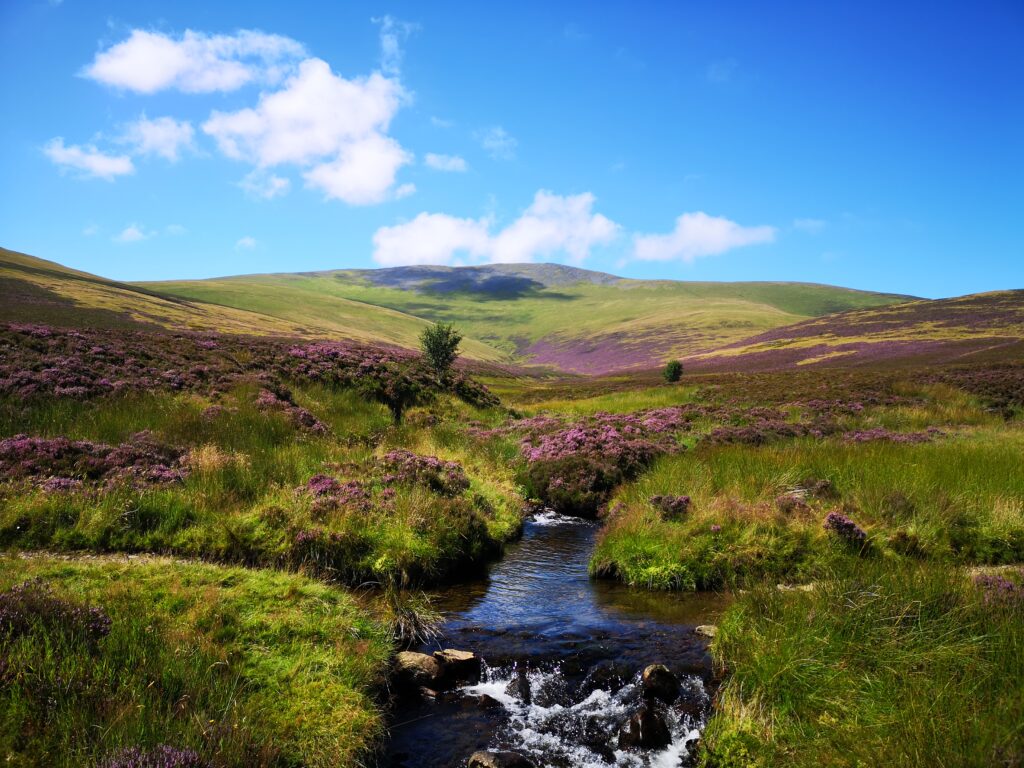
22nd January 2026 – Borneo – A Talk by Tony Marsh
Keswick Natural History Society met on Thursday. Our original speaker was unfortunately unable to attend due to personal reasons, so Tony Marsh our Chair, treated us to an interesting talk of his recent visit to Borneo.
Borneo is the third-largest island in the world, with an area of 748,168 km2 (288,869 sq mi), and population of 23,053,723. Situated at the geographic centre of Maritime Southeast Asia, it is one of the Greater Sunda Islands, located north of Java, west of Sulawesi, and east of Sumatra. Borneo has been inhabited by humans for more than 65,000 years and home to hundreds of different Indigenous groups, cultures and languages, loosely grouped under the term “Dayak“.
The island has been politically divided among three states, the sovereign state of Brunei in the north makes up 1% of the territory.[4] Approximately 73% of Borneo is Indonesian territory, and in the north, the East Malaysian states of Sabah and Sarawak make up about 26% of the island. The Malaysian federal territory of Labuan is situated on a small island just off the coast of Borneo.
The Wallace Line or Wallace’s Line is a faunal boundary line drawn in 1859 by the British naturalist Alfred Russel Wallace. It separates the biogeographic realms of Asia and ‘Wallacea‘, a transitional zone between Asia and Australia The line runs through Indonesia, such as Makassar Strait between Borneo and Sulawesi , and through the Lombok Strait between Bali and Lombok, where the distance is only about 35 kilometers (22 mi), but enough for a contrast in species present on each island.
The complex biogeography of the Indo-Australian Archipelago is a result of its location at the merging point of four major tectonic plates in combination with ancient sea levels causing isolation of different taxonomic groups on islands which at now seem close to each other.
On the Australian side, many species of marsupials are present, and some monotremes. On the Asian side, marsupials are excluded, and placental mammals such as apes, cats, elephants, monkeys, and rhinoceroses.
The Borneo rainforest is estimated to be around 140 million years old, making it one of the oldest rainforests in the world The rainforest is one of the few remaining natural habitats for the endangered Bornean orangutan. It is an important refuge for many endemic forest species, including the Borneo elephant, the eastern Sumatran rhinoceros, the Bornean clouded leopard, the Bornean rock frog, the hose’s palm civet
Peat swamp forests occupy the entire coastline of Borneo. The soil of the peat swamp is comparatively infertile, and is home to the hook-billed bulbul, helmeted hornbill and rhinoceros hornbill. There are about 15,000 species of flowering plants with 3,000 species of trees (267 species are dipterocarps), 221 species of terrestrial mammals and 420 species of resident birds and 440 freshwater fish species in Borneo. The Borneo river shark is known only from the Kinabatangan River.
Logging, land-clearing and conversion activities such as oil palm and timber plantations are considered to be the greatest threats to Borneo. With the arrival of the chainsaw and caterpillar tractor in the 1950’s– have perhaps have had the most impact. Opening up of new roads has been a key factor changing Borneo. Roads not only provide access to commercially valuable trees, they also allow immigrant settlers, hunters and land speculators to access new areas of opportunities.
Threats to the rainforest come from
Rampant poaching poses a grave threat to Borneo’s endangered species.
Pangolin: Sir David Attenborough, renowned naturalist and filmmaker, chose the pangolin (Manis javanica) as one of ten species he would save from extinction .
Arowana: Due to its popularity and outrageous price tag, the Super Red Arowana has been fished almost to extinction.
Orangutan: Young orangutans are in demand for a flourishing pet trade, with each animal fetching several hundred dollars. 200-500 orangutans enter the pet trade each year. This is a real threat to wild orangutan populations as they have an extremely low reproductive rate.
Water catchment. When forests are clear-cut, the soil is left exposed to the rain. After heavy rainfall, the erosion in the upper catchments of all the big river systems can lead to major damage downstream. Poor management of upstream land and vegetation also causes sediment build up of dams and damage to turbines of hydro-electric facilities.
Mining: Borneo also holds rich metal and mineral resources, including tin, copper, gold, silver, coal, diamonds, and different types of sand and stone.
Together, the forestry and mining sectors are main contributors to forest loss in Borneo.
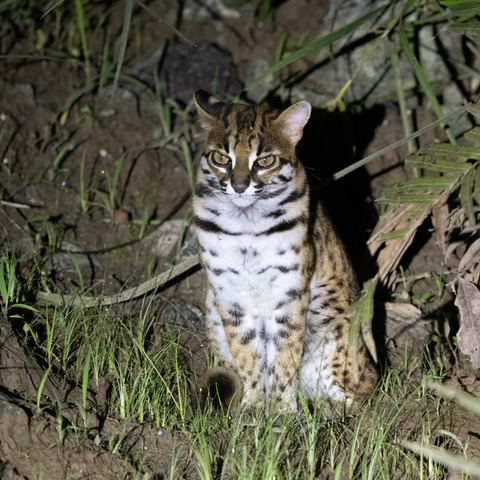
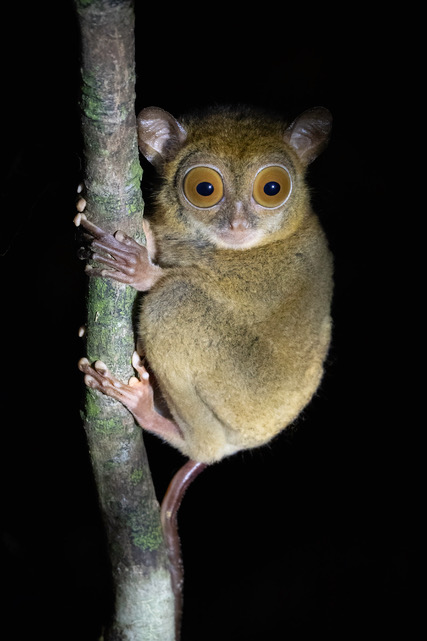
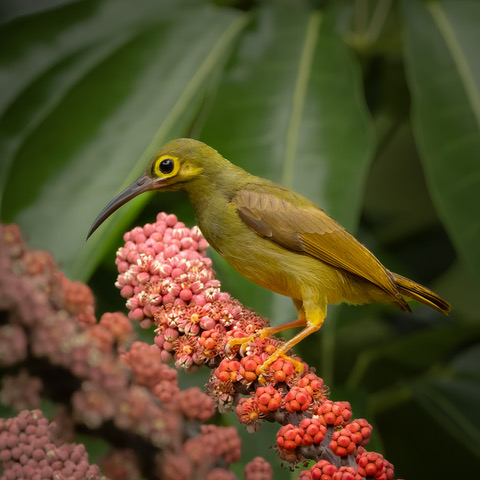
Tony’s talk included some fabulous photography including Orangutang, several species of squirrel including Black Giant Squirrel, Giant Red Flying Squirrel, Western Tarsier, Black Tarantula, Huntsman Spider, the rare Marbled Cat, Leopard Cat and Bearcat Bintrong, Malay Civet (which eats poisonous things, and is considered poisonous itself), Slow Loris, the very smelly Sunda Skunk, the very cute Bornean Pygymy Elephant, Many insect species including the amazing Twig Mimicking Mantis, Red Legged Centipede and many beautiful bird species such as Hornbills, Bee-eaters, Bulbuls, the Buffy Fish Owl and Blue Eared Kingfisher. Tony’s photographs are outstanding and the vast array of species amazing.
Following Tony’s review of Borneo, we finished a fine evening with some beautiful photographs of otters seen locally to Keswick.
Photographs courtesy Tony Marsh
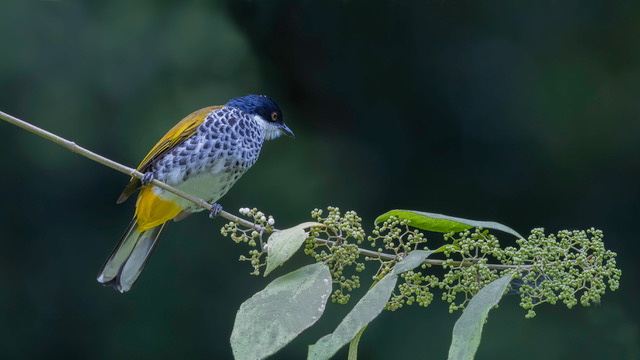
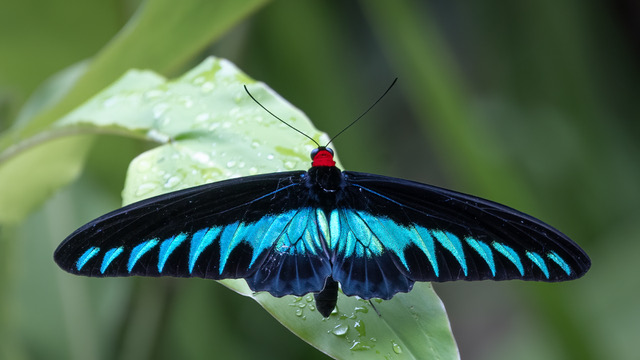
30th October 2025 – Honeycomb Worms and You – A talk by Dr Ann Lingard
Keswick Natural History Society was entertained last week by scientist, author, blogger and seashore guide, Dr Ann Lingard, who delivered a talk about the wildlife of Allonby Bay on the Solway Coast. This is a potentially hostile environment with areas of sand, mud and shingle that are exposed to rasping winds and huge dynamic changes, not least the twice daily tide, which can remove and replace up to 10 metres of water column from above the lowest tidal areas during “Spring Tides”, those that occur during the times of the lunar month when the earth and the moon are diametrically opposite each other with regard to the Earth. (Allonby Bay has the second highest tidal range in the UK).
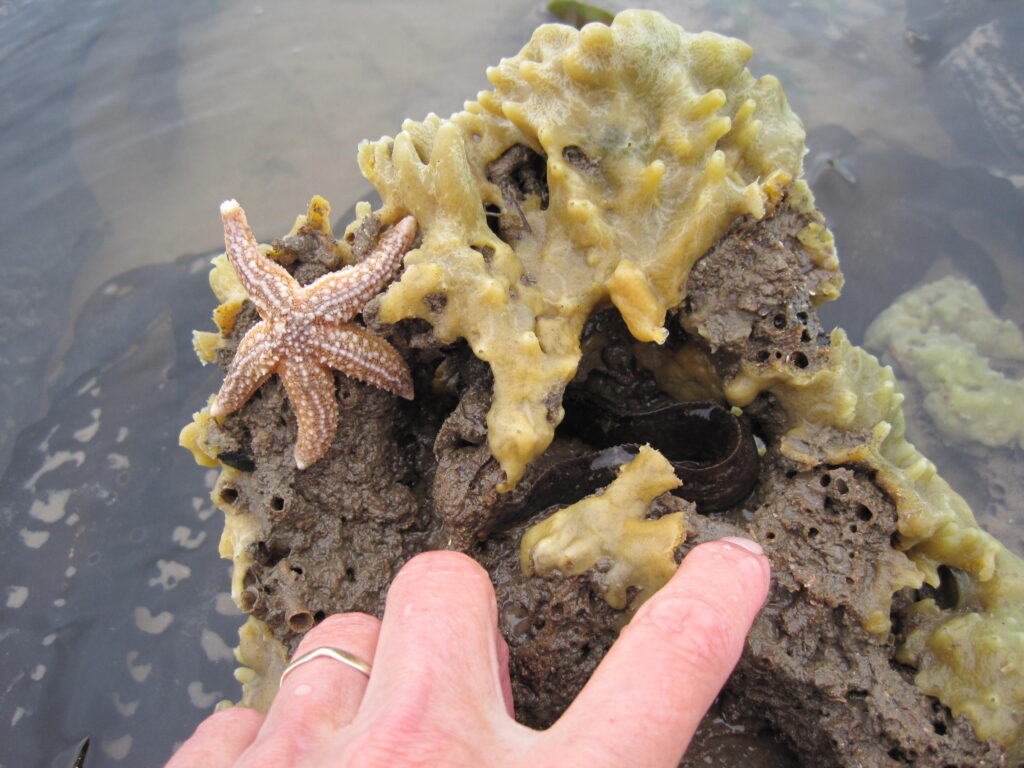
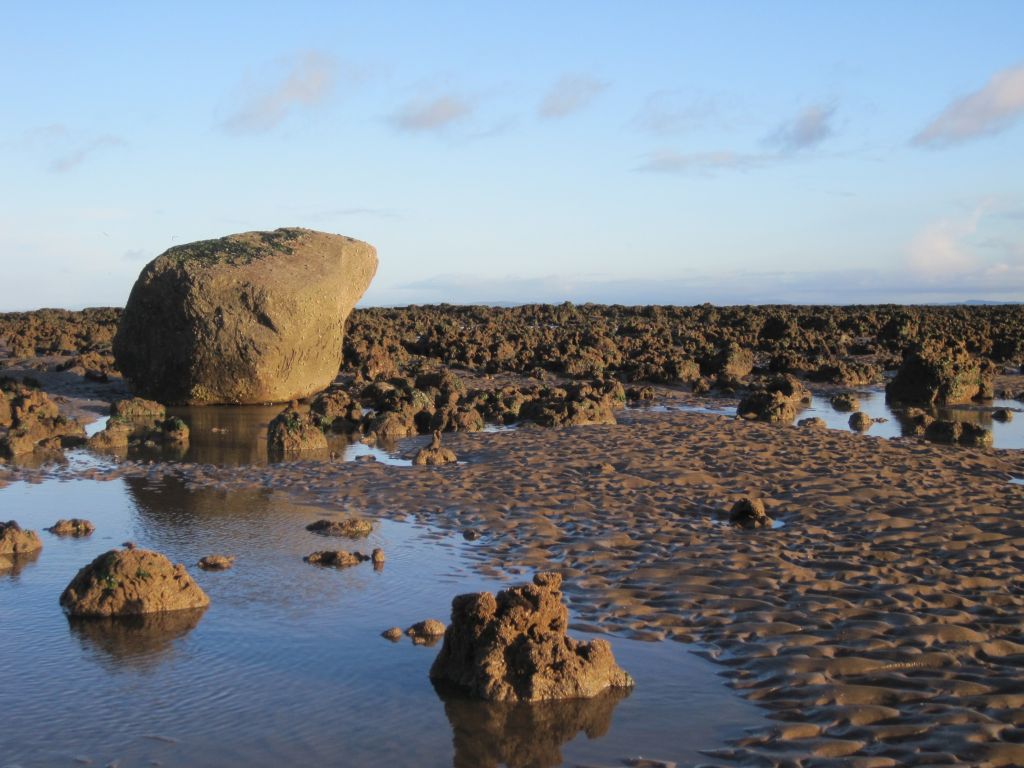
In spite of the difficulties, a whole suite of small animals live in the inter-tidal zone; many of them types of worms, the most important of which being the Honeycomb Worm. This creature fashions hard tubes formed by sand particles and mucous, but does so in huge connected colonies. This eventually produces significantly sized “reefs” which in turn change the environment by providing a hard structure for other animals and plants to attach to, such as shellfish, algae, sponges and types of seaweed including Sea Lettuce and Oarweed. They also create small lagoons between the reefs where sea water is trapped at low tide and hence provide sheltered environments for a variety of fish and invertebrates which would otherwise have to descend to deeper waters to avoid drying out. The worm’s lifestyle is fascinating, they feed by waving tentacles out of the tubes when submerged, filtering out food particles from the passing currents. The females release eggs and the males spermatozoa into the sea water where a few will combine, (hence the advantage of living in a colony), and the resulting nymph spends the first part of its life as a free floating, but tiny type of plankton, before growing large enough to settle down to build its own tube home. It is thought that it is attracted to other colonies by smell.
The importance of this unique collection of species, as well as its fragile vulnerability, has finally resulted in recognition of protected areas of various categories with, what Dr Lingard terms an “alphabet soup” of names; including MCZ, (Marine Conservation Zone), HPMA, (Highly Protected Marine Area), SAC (Special Area of Conservation) and SPA (Special Protection Area). Of these, perhaps the most significant is the HPMA, one of only three currently in UK waters, and the only one which includes a shoreline. This designation is intended to eliminate activities that would damage the sea floor, including bottom trawling and anchoring but is also meant to stop activities such as bait digging. (Dr Lingard described how the population of crabs in the area seem to have plummeted as a consequence of huge numbers of “soft-shelled” crabs being collected for use as bait). What is not clear is how these designated areas will be monitored and policed but there is good news that Cumbria Wildlife Trust has recently appointed Joe Harper as Allonby Bay Engagement Officer following a Lottery grant earlier in the year. Joe will engage with the local community and encourage them to monitor this rare, but vitally important, natural habitat.
The next meeting will be a talk by Mike Farrell on the 13th November in the Crosthwaite Parish Room at 7.30pm. Mike has worked for many years with firstly the local Rivers Trust and more recently the Environment Agency and will discuss the vital importance of conservation organisations working in partnership to maximise their effect, using his decades of experience caring for the Derwent catchment area as illustration. Visitors are very welcome, £5 at the door.
8th July 2025 – Field trip to High Borrowdale hay meadows
A dozen of us visited the wonderful upland High Borrowdale hay meadows along with Jan Darall, Land Manager and Policy Officer of Friends of the Lake District, the organisation who transformed sheep pastures into incredibly rich flowering hay meadows and continue to manage the area. A grazier puts sheep on the land for few weeks after the hay is cut. There is a mile or so of a walk in from the A6 road which was accompanied by scores of Ringlet and Meadow Butterflies with glimpses of two flying Small Pearl Bordered Fritillaries and a few Small Heaths. Sand Martins were flying above us and we had glimpses of a Grey Wagtail and a Dipper on the beck.
In spite of the challenges of land slippage on the valley sides which have threaten the field barns and the top edges of the meadows they are looking mighty fine with a striking floral display. Tree planting on the fell-sides has been less successful, mostly because of the unstable slopes and choosing Ash as a major shade tree before Ash Dieback had hit the country. We were surprised that there were actually few pollinators flying around the wonderful flowers in the meadows but were pleased to find a late season Chimney Sweeper Moth and there were plenty of Grasshoppers.
Lunch was consumed leaning against a remaining wall of the ancient farmhouse and we watched Buzzards high up above the ridges, a Goosander flew up the river and a Wheatear worked its way up a field wall.


For reports on more events, please see our Facebook page.